The Wreck of the Thisbe


The north Fraser coast, near where the Thisbe met her fate. Photo: Kevin Green
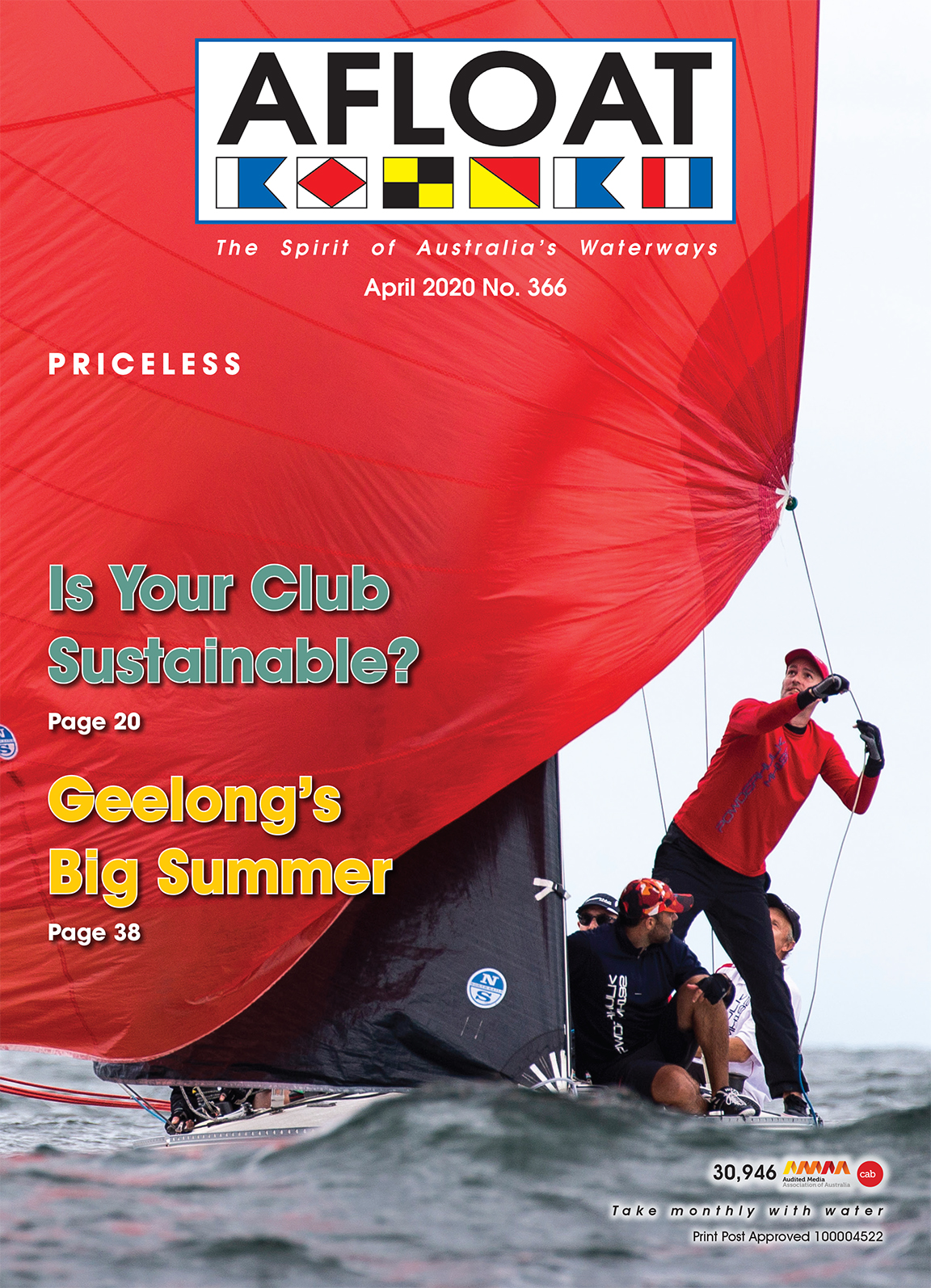
This feature article originally appeared in AFLOAT Magazine and forms part of our latest edition of boating features exploring shipwreck survival, coastal sailing and maritime adventure on the Australian coast.
She was wrecked on Lady Elliot Island during Cyclone Simon in February 1980, recalls Kevin Kel Hughes (with editing by Liz Ellis)
There we were five of us clinging onto the bow, staring down a 50ft aqua green wall of water to the coral below. The Thisbe was broadside and starting to roll and I remember saying, “It’s been nice knowing you fellas”.
She was a square-rigged schooner, a Navy lighter built at Cockatoo Island in 1932, made from solid Aussie hardwoods and designed to carry 120 tonnes of cargo. She’d been purchased by a Sydney businessman who planned to charter her to Japanese tourists off the resort island of Samari, just north of the Philippines. The skipper had been a first mate on Pacific oil tankers. He probably had the appropriate ticket to satisfy the insurance but no experience in taking a sailboat up the coast. The radio operator was a Sydney radio ham, who had never been on a boat before. The engineer was a navy man and a fairly competent seaman. I was the bosun. I’d just completed two-and-a -half-years on a yacht sailing from Melbourne to Thursday Island. The young Kiwi deckhand was keen but had no experience. After two months completing the basic fit-out, the Thisbe‘s sea trials went smoothly and we returned to port to stock up with provisions.

The Sydney to Coffs Harbour leg was smooth sailing in light SE conditions and we arrived there late afternoon. We were all pretty tired, so after checking everything over we did a cook-up, chatted a while and hit our bunks, planning on a 0600 getaway. Next morning, we were up early. Just before 0600 I suggested to the skipper that I grab a newspaper to check the weather (this was 1980, folks, so no internet!). He said if I wasn’t on board by six am I would be left behind. I should have called his bluff because he needed me as crew. So, the news we didn’t get, because of no newspaper, could have saved a shipwreck. We headed out to sea again into perfect conditions. We even hauled up some sail and were making about 10 knots.
Breaksea Spit
Sailing through the night as far as Fraser Island (K’gari), we were abeam Indian Head about noon and changed course to the east to get beyond Breaksea Spit, which runs about 20 nautical miles out to sea beyond Sandy Cape. The weather was starting to look very dirty, the barometer was falling and the wind, a stiff southeaster and increasing. Our leeway to the north would have been substantial, as the wind was getting up around 30 knots. We were relying on the skipper and radio operator, closeted in the rear cabin, to navigate us clear of the shoals.
I was on watch in late afternoon and the swell and sea were building, when directly ahead I saw green breaking water. I yelled “Life jackets on! Breaking seas ahead!” In no time we were engulfed in green water breaking over the boat. She hit the sand hard and drove the rudder post up through the deck, the wheel went over the side along with gas bottles, lines, the alloy boat and anything else that wasn’t tied securely to the deck. She hit the sand again and we went over into deeper water on the other side of the shoal. There were lines around the props and no steering and chaos on deck. We did what we could to secure the deck and pump the bilge. We set a sea anchor and that pulled us into the wind and swell, which was now blowing a full gale. We didn’t know we were headed into Cyclone Simon which was coming down the coast just to our north. Apparently, the radio operator had been talking to Tokyo and Noumea but couldn’t get a weather report on the Queensland Coast. Now, his radios were wet, so we had no radio contact at all.

Cyclone
By next morning we were in a full cyclone with the wind at force 9 or 10, visibility at zero, and the swell and sea running at a good 50 feet with spume blowing off the top. The Thisbe, at 120 feet, was taking it well, sitting about 30 degrees off the wind on the sea anchor and riding the swell just off the bow. By now the wind, water and spray were making it too dangerous to go on deck.
Sometime that day the wind dropped and we were able to get on deck and use the deck pumps. The hold was flooded and dangerous but we made a few sorties down there to bring up some stores. The eight-man life raft was still secure on the bow. Before long, the wind came back screaming with a vengeance from another direction. The seas were confused and the odd rogue wave would slam the cabin side and started breaking it away from the deck so that water was gushing into the cabin.
We had a few tools and some four-inch nails, so we proceeded to nail the cabin side back into place, taking turns to hold one another by the legs in hellish conditions.

With a portable radio direction-finder, we managed to get bearings from Rockhampton, Bundaberg and Gladstone which gave us a rough position. We had an old 2meg set in a cupboard which we hooked up and relayed a MAYDAY to Rockhampton SAR, telling them we were being driven by wind and tide straight toward Lady Elliot Island. They told us they had sent an Iroquois helicopter to look for us, and that the lighthouse crew at Lady Elliot would leave the light on after sunrise and keep a lookout for us. Shortly after that, the Iroquois pilot radioed that he was above our position but could see nothing through the wind and spray. As he was low on fuel, he had to fly back and was unable to help us.
Lady Elliot grounding
The sun was starting to glow in the east after the second night at sea and the lighthouse was getting closer. We had no way to steer the boat, so I was instructed to go forward and let go the main anchor and lots of chain in the hope we could stop the inevitable collision with the reef surrounding the lagoon. The wind was starting to ease but the swells were still huge and with every swell the anchor dragged, taking us closer to the reef. I realised it would be safer to be on the bow as it is the strongest part of a ship. Every shipwreck I have seen, the bow section is still in one piece. Next thing I know, everyone had chosen to join me at the bow. By this time, the Thisbe was broadside to the swell, dragging ever closer and starting to roll toward the reef when the anchor finally hooked, and with the tonnage and surge the anchor chain broke like a piece of cotton.

I remember saying: “Been nice knowing you fellas.” Then it all went into slow motion, the bow swung down the wave which broke halfway down the deck, smashing in the wheelhouse, the masts were swinging wildly and us on the bow were riding a 120ft surfboard, and probably screaming. She hit the reef hard and broke the keel, as the 10×2 inch Oregon deck planks were popping up out of the deck, and we were fearful of the masts coming down but they stayed up due to the sturdy navy rigging. More large swells pushed us up further onto the reef and we became wedged with the bow hanging just into the lagoon, the wind was easing and the tide dropping. We were safe for now.
The lighthouse crew arrived on the beach with a surf reel and indicated for us to stay put. After an hour so one of them swam out with the rope across the lagoon. We secured the rope to the bow, abandoned ship and went hand-over-hand to the beach. I think I kissed the sand and did a little dance. We were all pretty happy to be on solid ground.


Forty years later, my partner and I flew to Lady Elliot. We found one of the Thisbe‘s engines rusting away on the reef: some of her timbers were used in the resort construction. There was a typed account of the shipwreck, which we were able to correct. For the record, no we weren’t smuggling drugs, and no we didn’t ‘disappear quickly’. A few days after the wreck, the owner flew us off the island and we resumed life elsewhere. It didn’t put me off sailing, though!

This feature article originally appeared in AFLOAT Magazine. To explore more stories like this, browse the AFLOAT Magazine archive or view the latest edition of AFLOAT Magazine.